

Time Buffers
The TOC logic is to define a safety element and constantly monitor how the safety element is being used. This safety element is called a buffer. In procurement from a supplier for a non-stock SKU, the buffer is a time buffer.
The supplier lead times are not constant in reality and suppliers often late, hence the need for protection. Even if the supplier adds to his production and shipment times protection time, we need to add to that a protection for ourselves.
In this version we provide a higher resolution of the buffer in order to provide the user with more efficient decision-making tools:
- Supplier's Lead Time - that time represents the supplier's declaration of Lead Time.
- Time protection - additional time that protects the Supplier's Lead Time. That time is added to the Lead Time when considering the scheduled time to order.
- Shipping - additional time to the Lead Time and protection, relevant in cases where the supplier is responsible for the order until it reaches the harbor. In this case, the quoted date that the supplier provides doesn't include the additional shipping.
Using one holistic buffer
Alternatively to that resolution, one can also define one holistic buffer for the whole process. That buffer is a variable that is subject to the user's decision. It represents the time frame that is given to receive the order from the supplier in very high chances. The initial buffers are recommended to be 1.5 times the supplier's lead times.
See Example
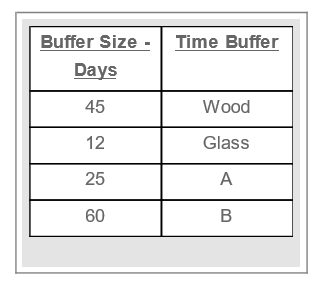
We are a furniture factory. We purchase wood from a wood factory. The supplier promise to deliver the wood within 30 days from the order date. We defined a buffer for the wood from that supplier as 45 days.
The buffers are set to the products according to the buffer class.
See Example
Comments
0 comments
Please sign in to leave a comment.